Let’s start with a trailer…
My graduate student at MassArt’s Dynamic Media Institute, Hessam Daraei, created this short film. After graduating in December 2018, he returned to Tehran, Iran. But this project has a long history before then.
In the mid-1970s, I began my first full-time teaching position at the Typography Design Studio, led by Professor Krzysztof Lenk, at my alma mater, the Academy of Fine Arts in Łódź, Poland.
For one of the studio assignments, which I repeated many times, I asked my students to document examples of urban typography and visual communication on 35-mm slides—advertising murals, propaganda billboards, storefronts, signboards, posters, and more. Over the years, the collection grew to several hundred slides, although there was little detailed information about photographers, locations, or dates.
In 1987, I moved to the U.S., leaving my entire collection of books, photographs, and slides in my studio in Łódź. Over time, the collection was moved several times, and the slides, along with other items, went missing. Unexpectedly, in 2009, more than 20 years after leaving Poland, I found one box of 200 35-mm slides in perfect condition. When I opened that box after more than two decades, I realized it was more than just a student project.
These slides as a whole can be seen as a portrait of Łódź during the period marking the beginning of the end of communism in Poland and the rise of grassroots capitalism. This collection today tells a compelling story of the visual language of that era, as well as the history of the people who lived through it. It creates a unique dialogue between propaganda billboards and shop windows of small businesses— the so-called “private initiative”—between posters promoting movie premieres and ads for local discos and linen pressing. The city’s daily life is captured in its typography—raw, without the grand language of the Polish School of Posters. It’s a reality that nobody expected to become history, nor did they expect it to turn into visual poetry.
I call this collection Łódź-ORWO. The name refers to the only slide transparency film stock available in Poland at that time—ORWO-Chrom, similar to American Kodak-Chrom but ‘made in GDR (German Democratic Republic).’
The project gained momentum beginning in 2016. The initial exhibition of the Łódź-ORWO project, titled Łódź Everyday: Jan Kubasiewicz’s Project, took place at Re:Medium Gallery in Łódź in 2016 (co-curated with Sławomir Krajewski and Elżbieta Fuchs).
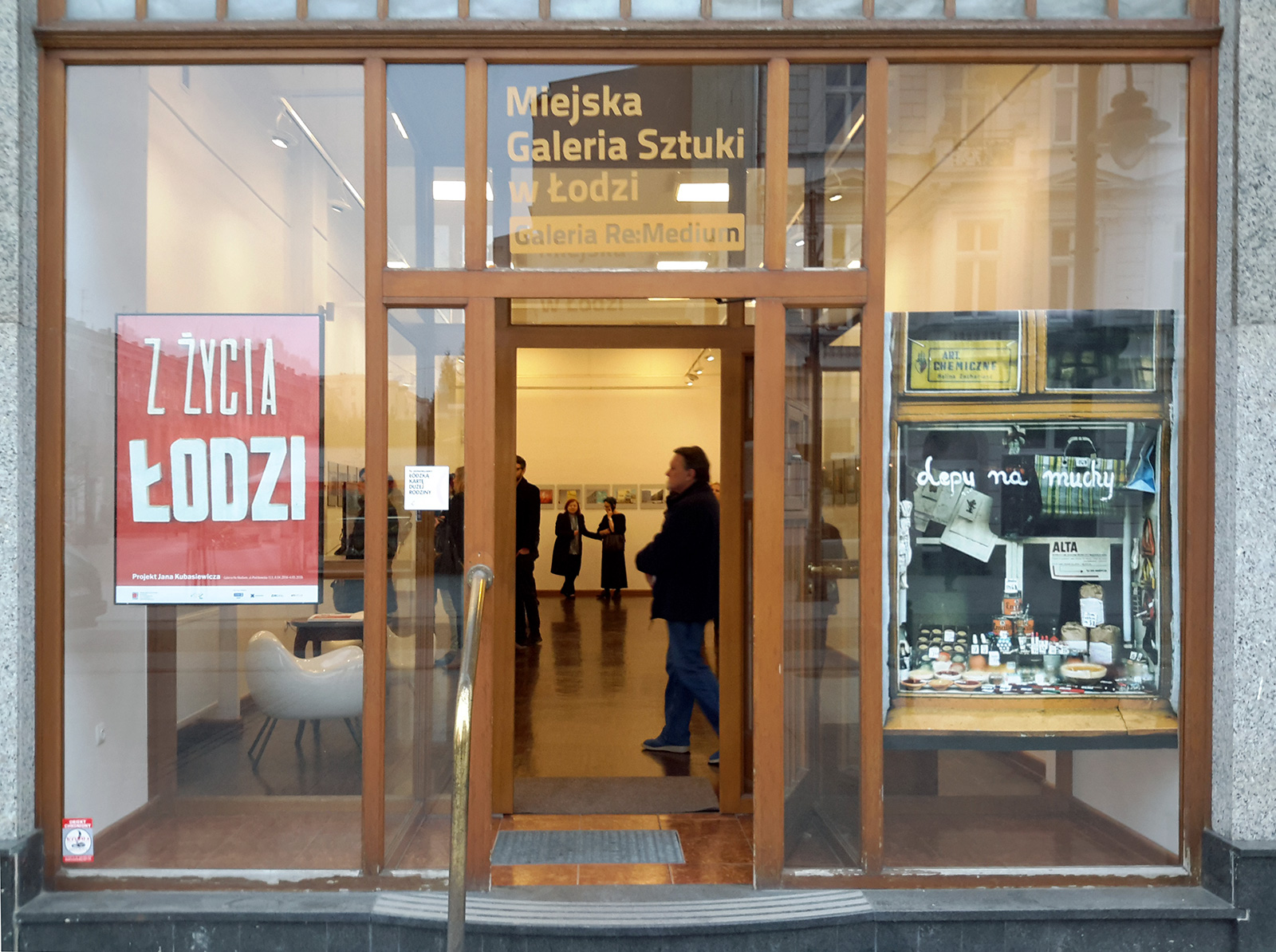 Re:Medium Gallery entrance on the day of the Łódź-ORWO opening.
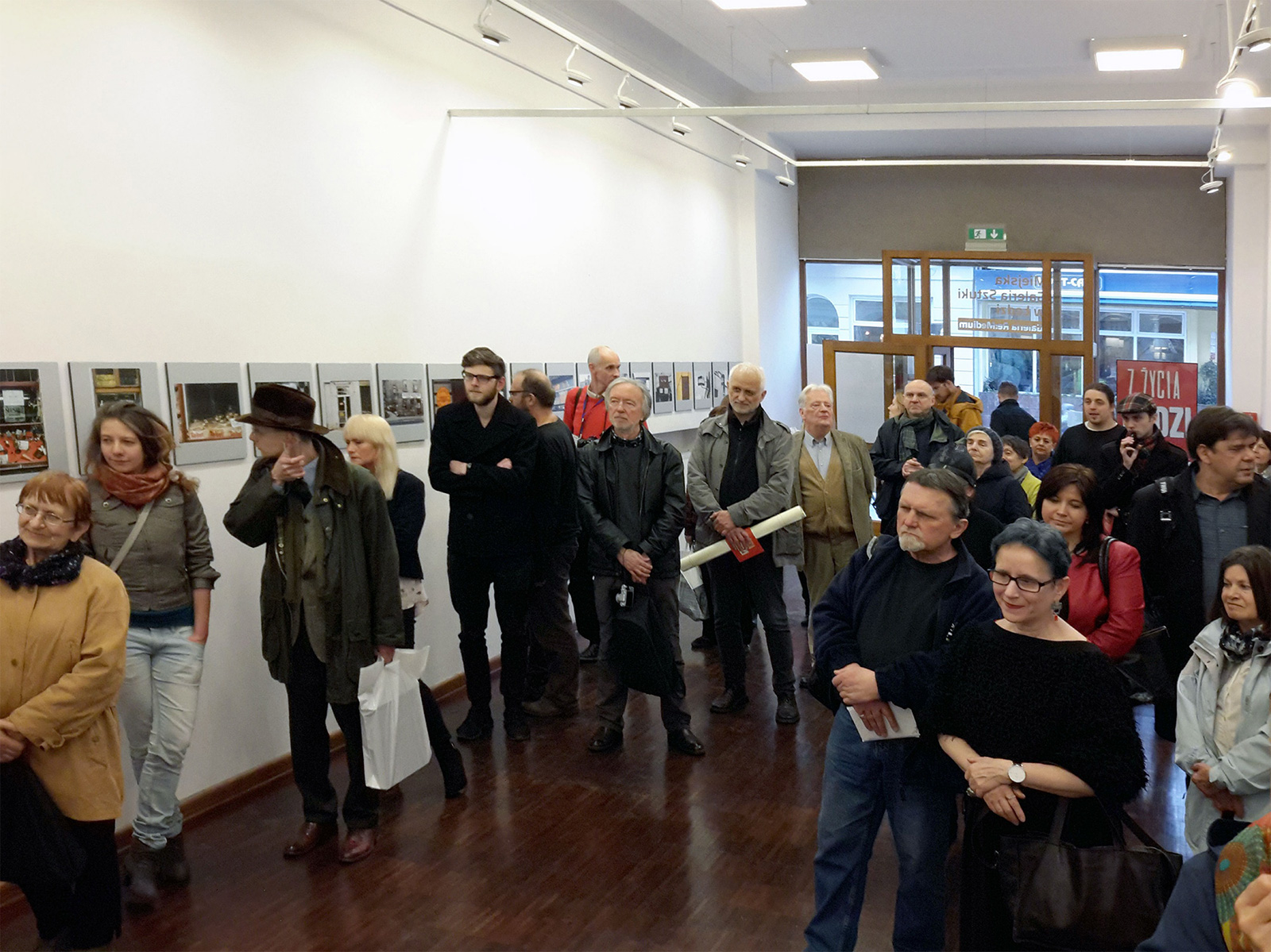 The Łódź-ORWO opening at Re:Medium Gallery.
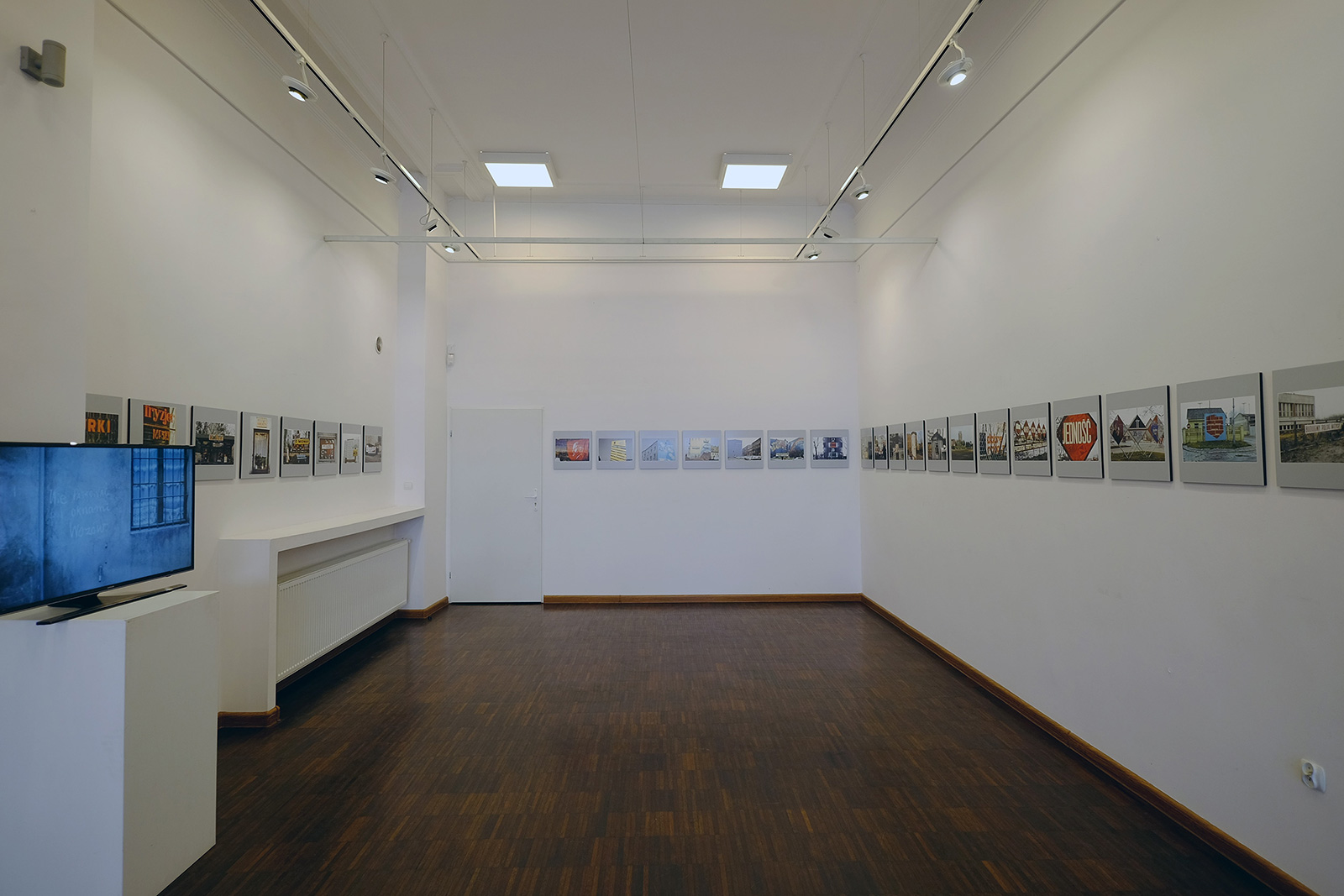 Re:Medium Gallery before the Łódź-ORWO opening.
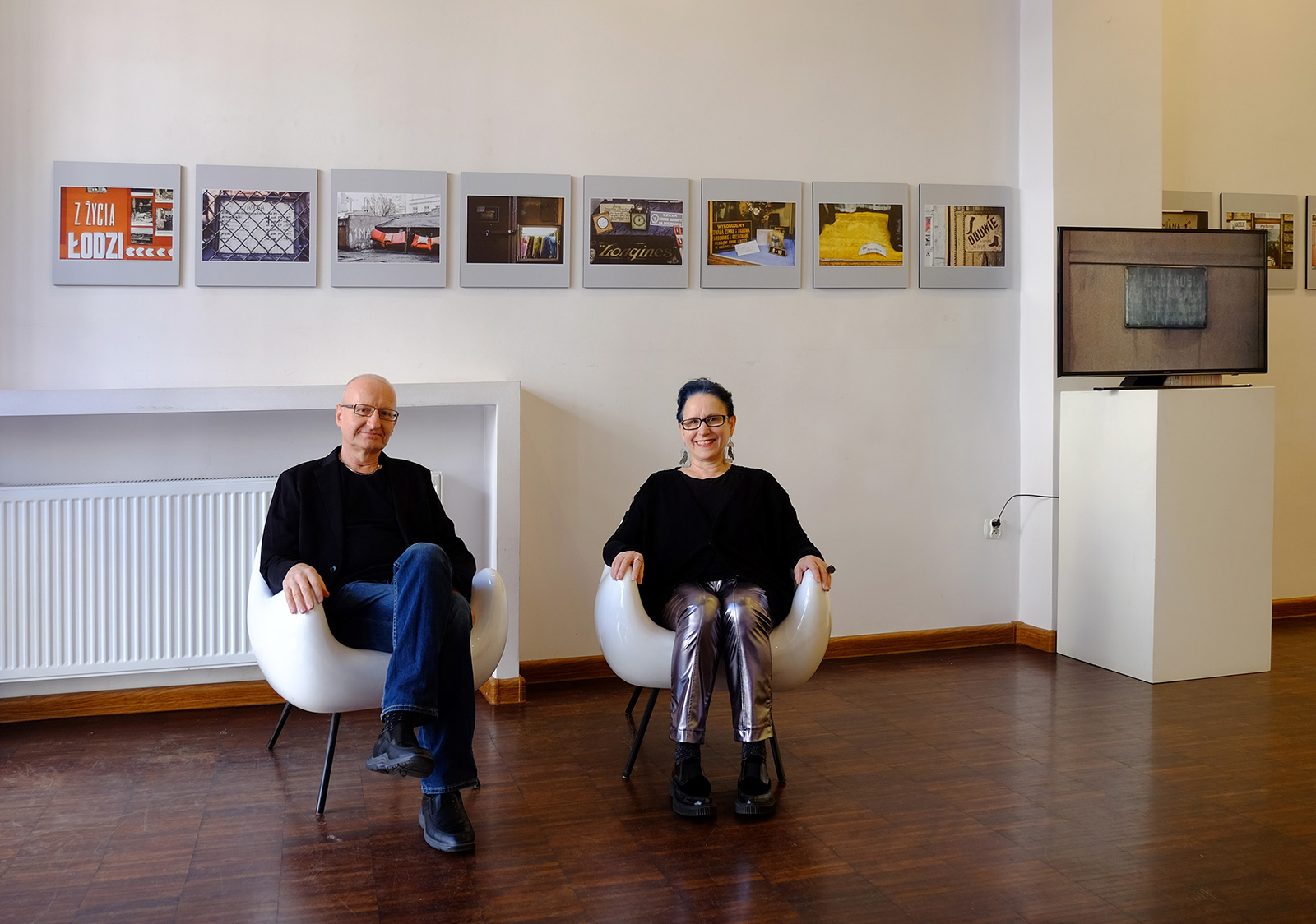 Jan Kubasiewicz and Jadwiga Janik at Re:Medium Gallery before the Łódź-ORWO opening.
The first American exhibition of the Łódź-ORWO project, titled Łódź—Still The Promised Land: Jan Kubasiewicz’s Project, took place at the Jacek Giedrojć Gallery, at the Center for European Studies, Harvard University, Cambridge, Massachusetts, in 2016–2017 (co-curated with Grzegorz Ekiert and Bettina Burch).
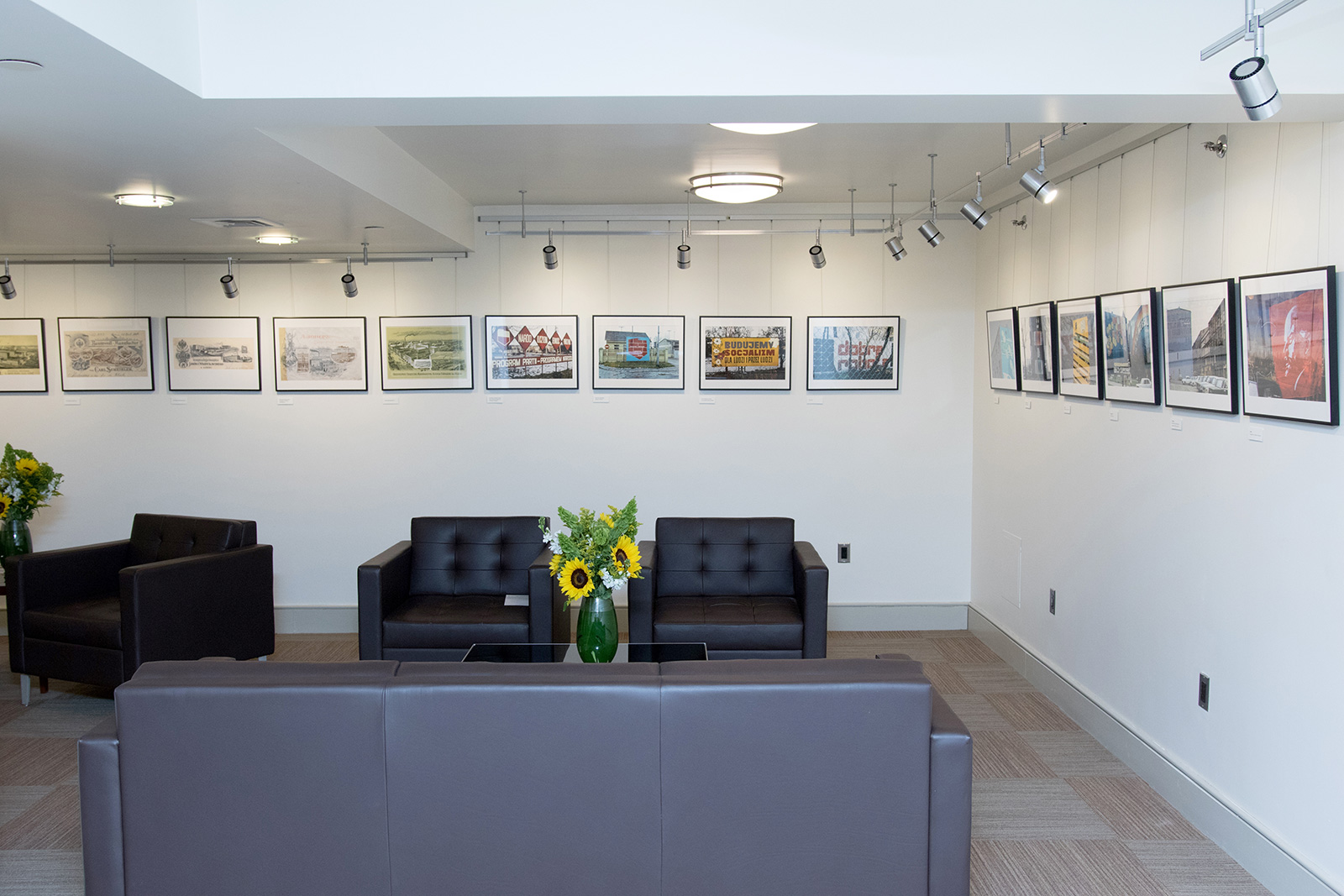 The Jacek Giedrojć Gallery at Harvard University, before the opening.
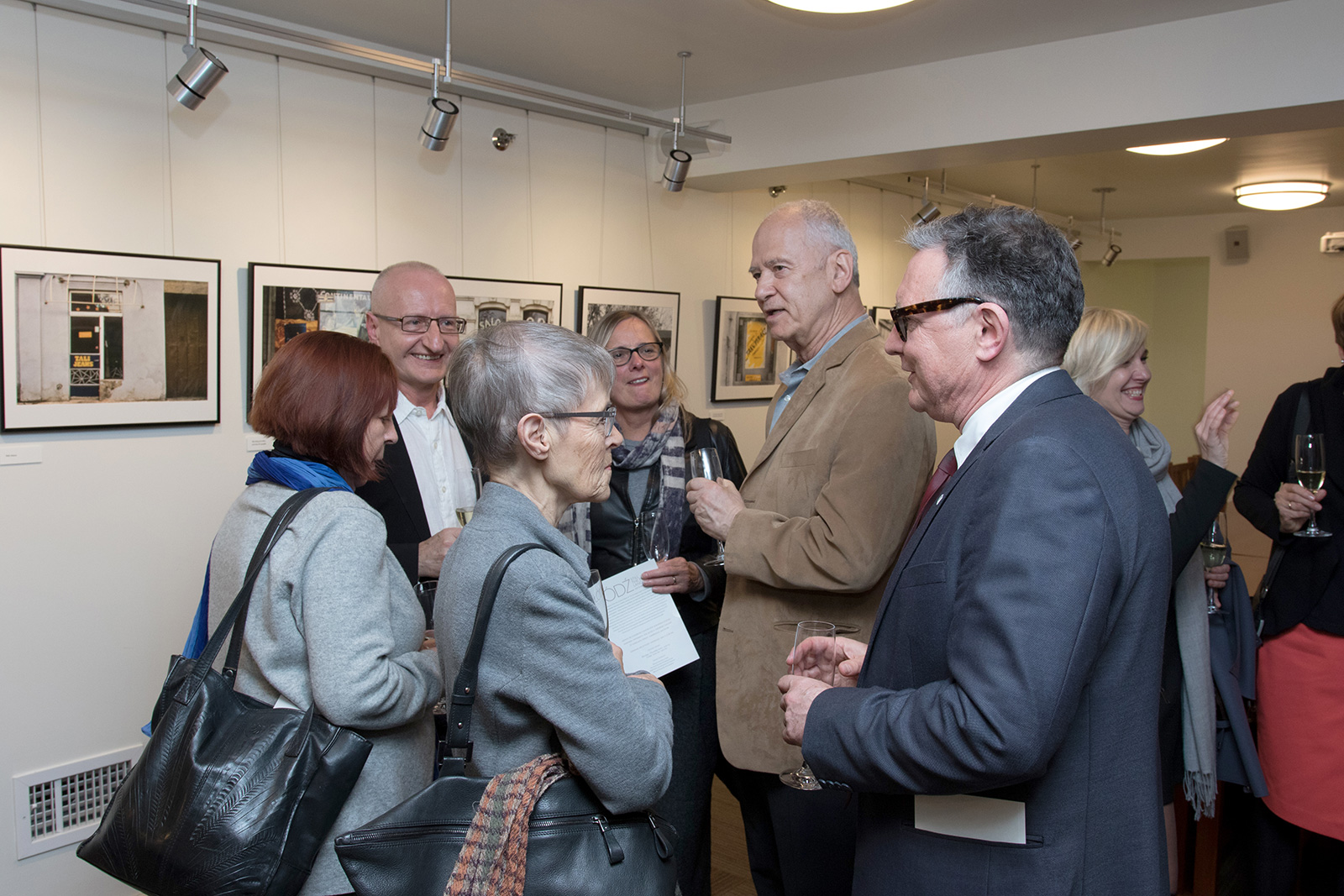 The opening at the Jacek Giedrojć Gallery at Harvard.
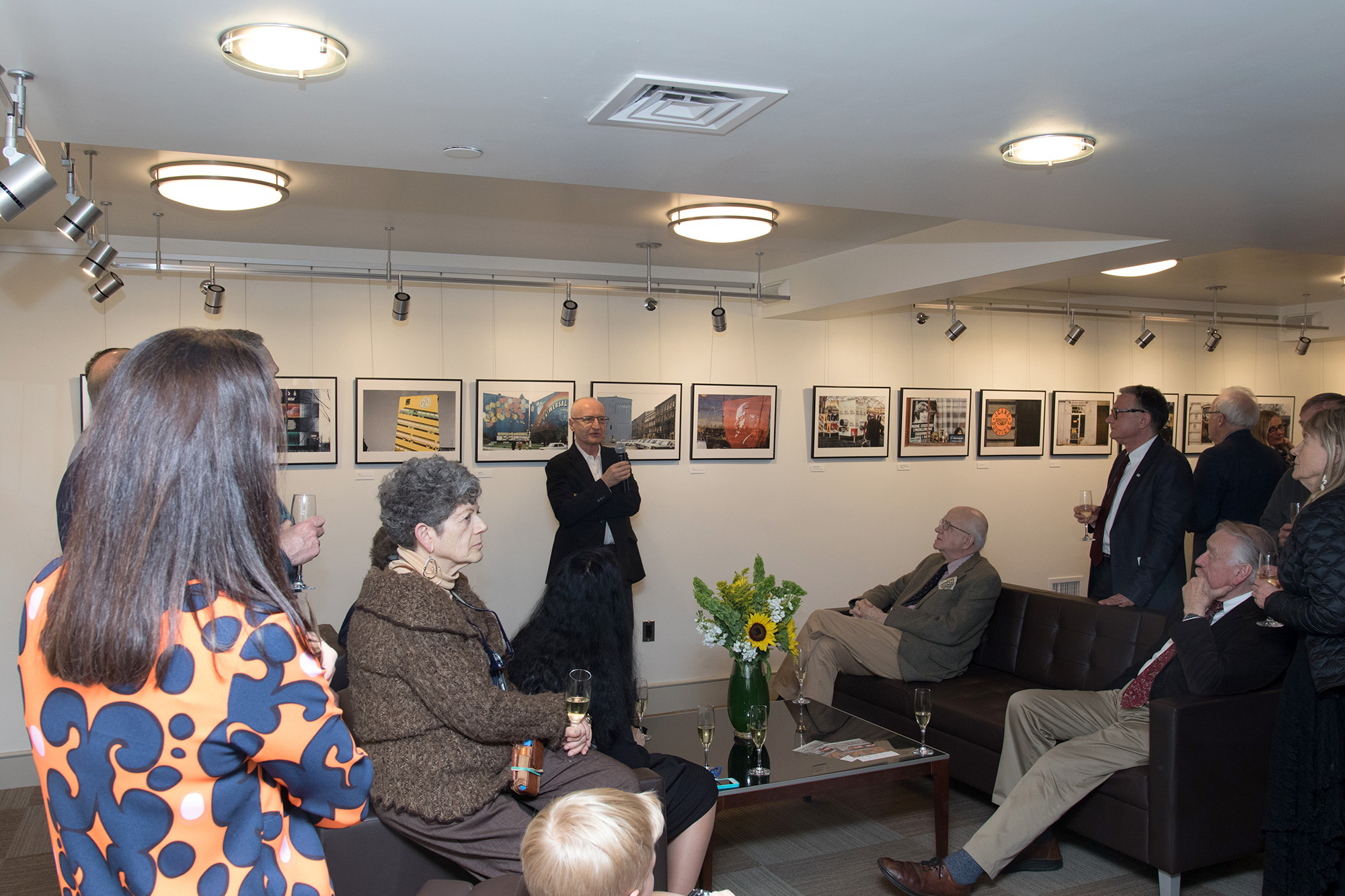 The opening at the Jacek Giedrojć Gallery at Harvard.
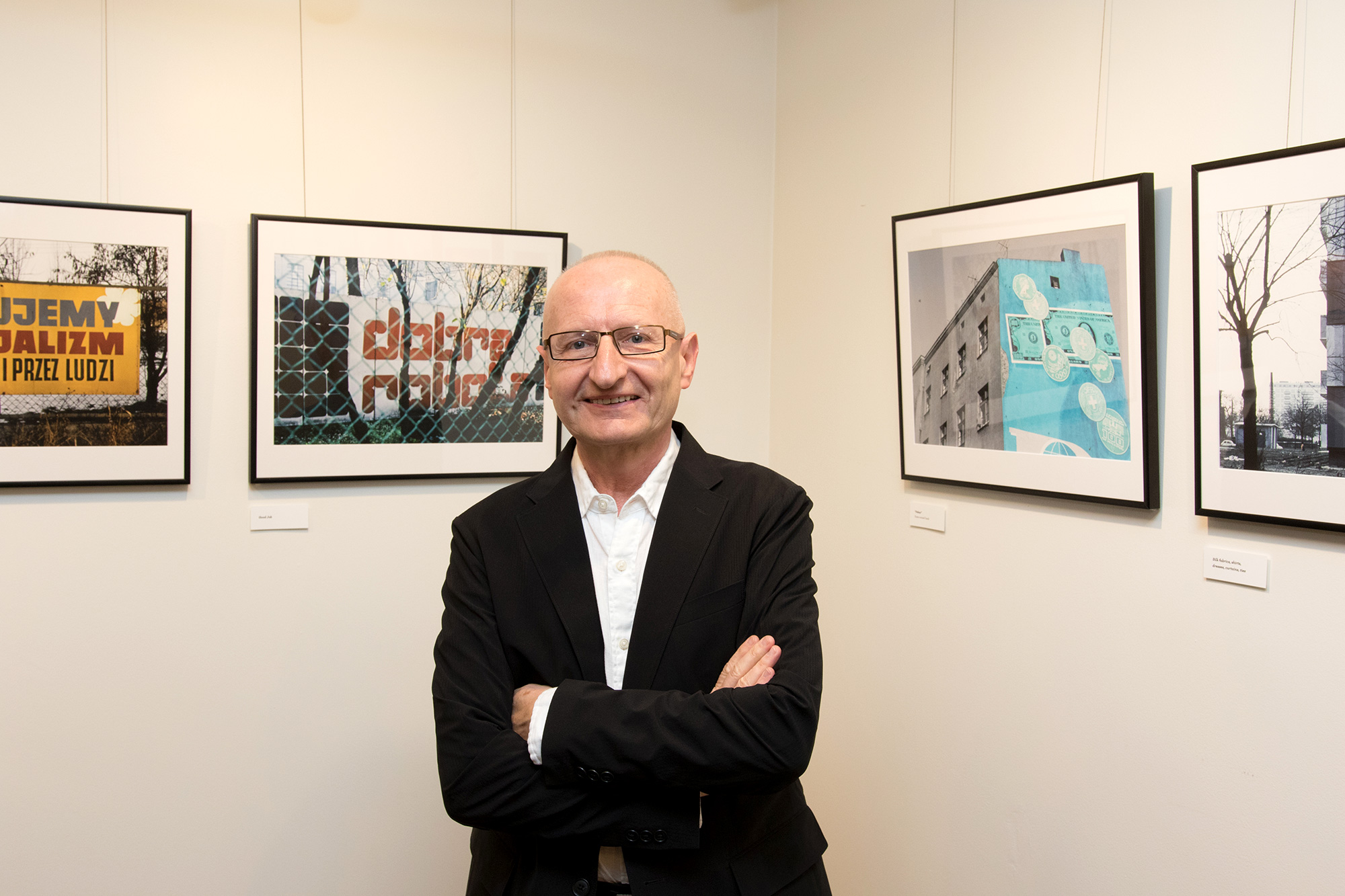 The opening at the Jacek Giedrojć Gallery at Harvard.
At the Harvard exhibition, curators presented visuals depicting three key moments in Łódź’s history. First, they emphasized the city’s late 19th-century industrial “magnificence” by displaying enlarged “vignettes,” copperplate engravings of factory complexes found on official stationery or invoices. Second, they included a selection from late 1970s Łódź-ORWO, documenting the period marking the beginning of the end of communism in Poland. Third, they presented a set of contemporary photographs by Sławomir Krajewski taken in 2016, depicting old industrial spaces that have been renovated and transformed into shopping centers, hotels, galleries, movie theaters, and more. The exhibition poster clearly emphasizes all three sections of the show.

The project was featured in a few publications.
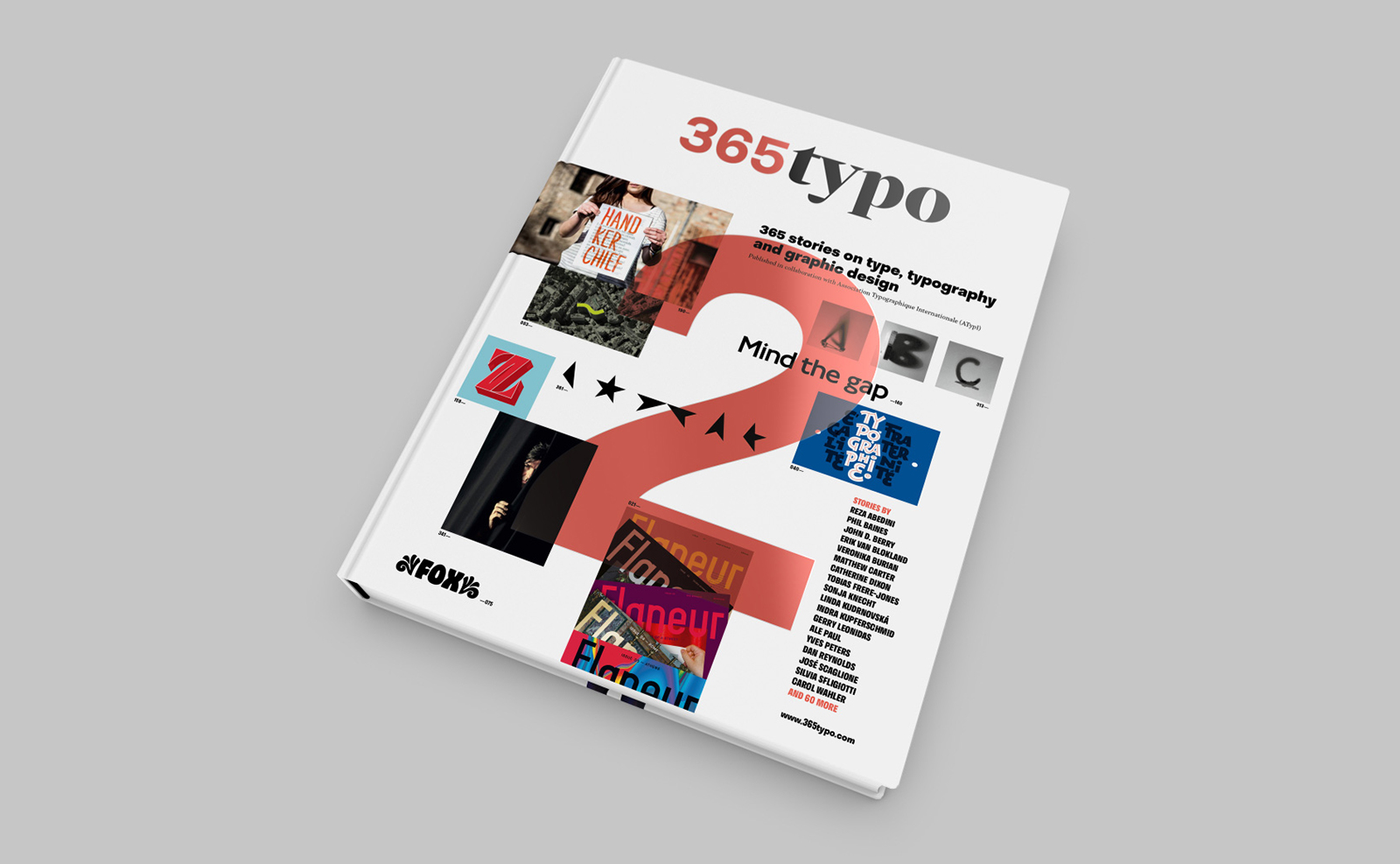 In early 2017, the Łódź-ORWO project was included in 365 Typo, Volume 2, published by Etapes: Editions in collaboration with the Association Typographique Internationale (ATypI). Here’s a link to the PDF.
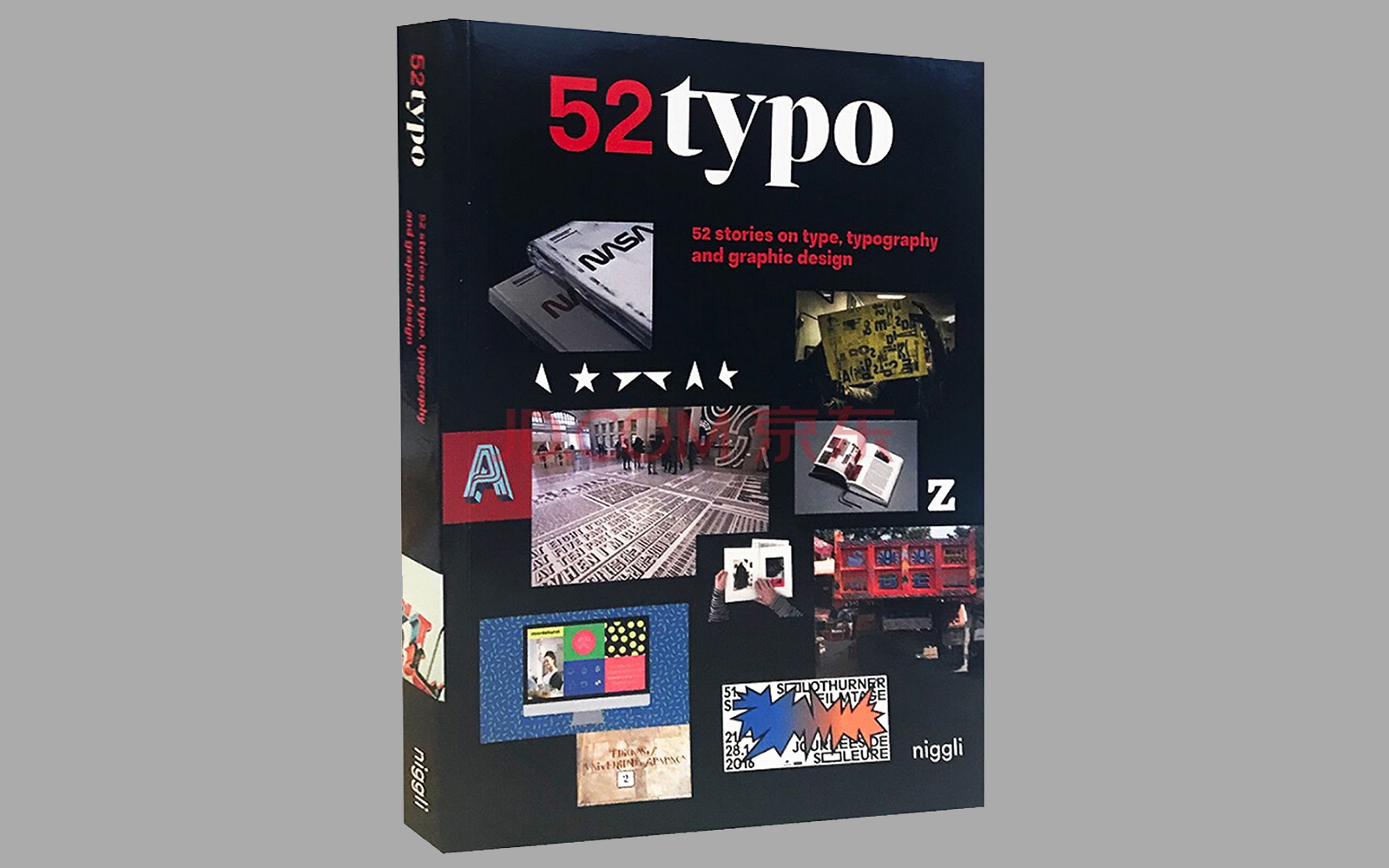 At the end of 2017, the Łódź-ORWO project was included in 52 Typo: 52 stories on type, typography, and graphic design, published by Niggli. Here’s a link to the PDF.
The book titled Łódź-ORWO: A Project by Jan Kubasiewicz was published by Bookidea, a small press in Warsaw, and released in October 2018. Sławomir Krajewski, the owner of Bookidea, insisted that the entire set of 200 slides be included in the book. He invited Marcin Wicha, a designer, writer, and columnist, as well as an influential author of award-winning books, to contribute a text to the Łódź-ORWO book, which he did.
The book’s public “premiere” was organized by Krajewski at the MS2, a branch of the contemporary art museum in Łódź. The event featured an introductory lecture and panel discussion moderated by Piotr Rypson, then deputy director for research and acting director of the National Museum in Warsaw.
 Jan Kubasiewicz’s presentation at MS2.
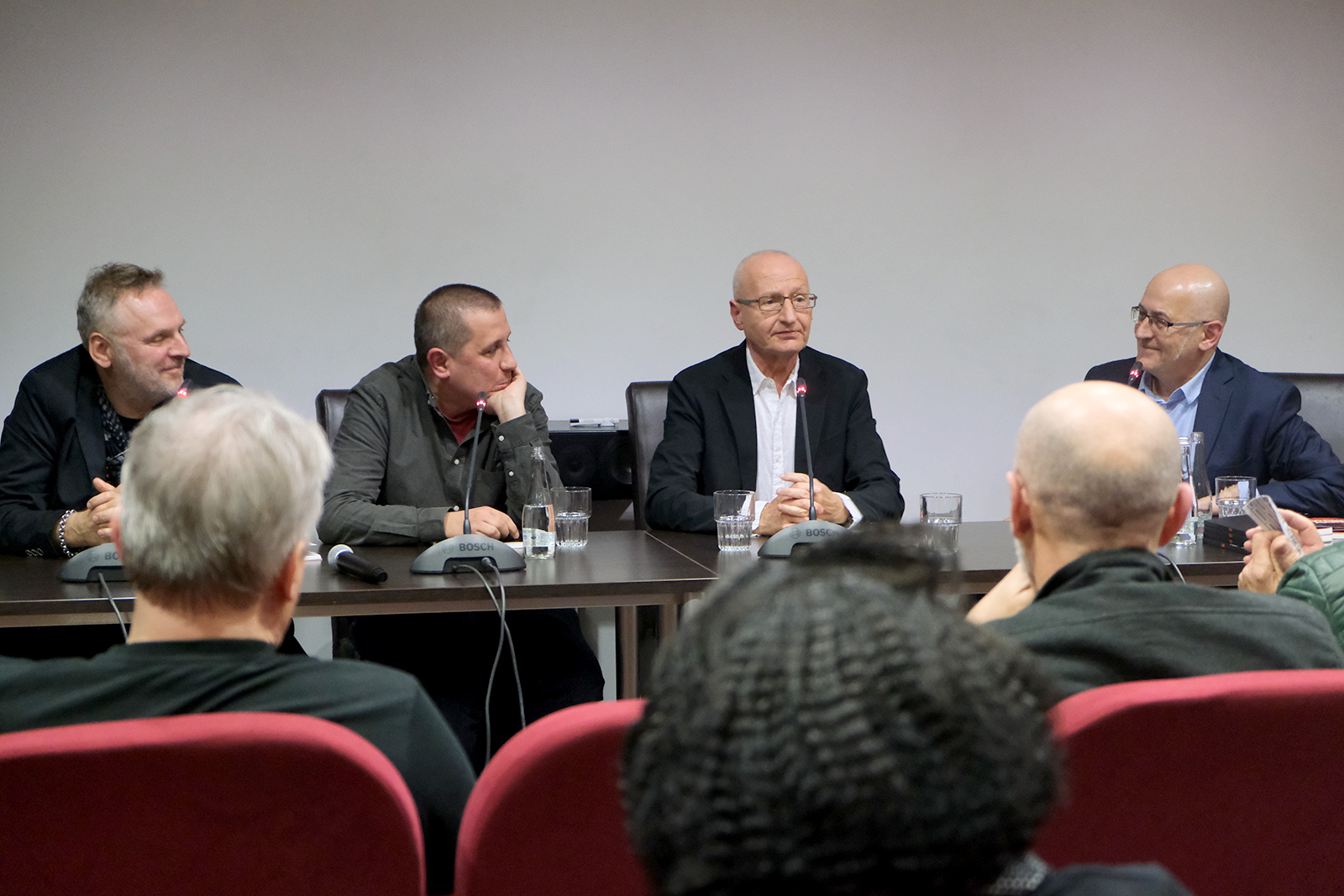 Panel discussion at MS2; from right to left at the table: Piotr Rypson, moderator, Jan Kubasiewicz, Marcin Wicha, Sławomir Kosmynka.
This old student project, which tells such an intense story about the visual language of a specific time and place, makes me, as an artist and educator, occasionally think about the following question: what story about us and our visual environment will be told when someone examines our students’ work forty years from now?
The book is available on Amazon.